Starfish STL Support-Free 3D Model: A Simple and Practical Option for Ocean-Inspired Prints
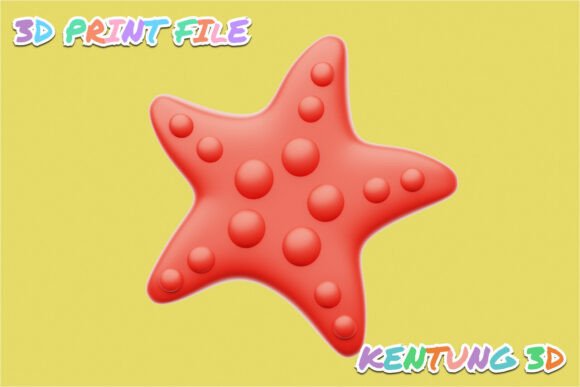
The Starfish STL Support-Free 3D Model is a digital file designed for 3D printing enthusiasts who want to create a small, decorative object with minimal effort. This model captures the essence of a starfish with smooth curves and a clean, minimalist design that’s both visually appealing and easy to print. Unlike more complex models that may require additional supports or post-processing, this version is optimized for support-free printing, making it an excellent choice for beginners and experienced makers alike.
If you're looking for a simple yet charming way to add a touch of the ocean to your 3D prints, this model could be a great fit. It's ideal for those who want to experiment with 3D printing without the hassle of dealing with overhangs or support structures. The flat and well-balanced design ensures stable printing results, even on basic FDM printers.
Why You Might Be Interested in the Starfish STL Support-Free 3D Model
There are several reasons why someone might consider using this model. First, its support-free nature simplifies the printing process, reducing the time and effort needed to achieve a clean result. This makes it particularly appealing to individuals who are new to 3D printing or those who prefer a more straightforward workflow.
Second, the model’s lightweight and compact size make it suitable for a variety of purposes. Whether you're creating a small desk accessory, a beach-themed decoration, or a component of a larger DIY project, this starfish can serve as a versatile addition to your collection. Its clean lines and natural shape also make it a good fit for minimalist or modern decor styles.
Finally, the ability to scale the model to different sizes adds to its flexibility. Users can adjust the dimensions to suit their specific needs, whether they want a tiny ornament or a larger statement piece.
Benefits and Considerations
The primary benefit of the Starfish STL Support-Free 3D Model is its ease of use. Since it doesn’t require any support structures, it minimizes the risk of print failures and reduces the need for manual intervention after printing. This can save time and materials, especially for users who are just starting out with 3D printing.
Another advantage is the model’s compatibility with most FDM printers. As long as you have a standard printer and the appropriate software to manage STL files, you should be able to print this model without issues. The recommended material is PLA, which is widely available and known for its user-friendly properties, such as low warping and good layer adhesion.
However, there are some considerations to keep in mind. While the model is designed for support-free printing, the success of the print still depends on factors like printer calibration, nozzle height, and print speed. Users should ensure their printer is properly set up to achieve the best possible results.
Additionally, the model’s simplicity means it may not be suitable for advanced users looking for intricate details or complex geometries. If you're aiming for highly detailed or functional parts, you may need to explore other models that offer more complexity.
Situations Where This Model Is a Strong Fit
This model is particularly well-suited for individuals who want to create a quick and easy 3D print. It works well for those who are testing their printer settings or experimenting with new materials. The lack of support structures also makes it a good option for users who don't have access to a reliable support-removal tool or who prefer to avoid the extra steps involved in removing supports.
It's also a great choice for anyone interested in ocean-themed decor. Whether you're designing a coastal-inspired office space or adding a personal touch to your home, this model provides a subtle and elegant way to bring the sea indoors. Its neutral design allows it to blend seamlessly with a wide range of color schemes and interior styles.
For educational purposes, this model can be useful in teaching basic 3D printing concepts. It serves as a practical example of how design choices—such as avoiding overhangs—can impact the overall printing experience.
When Alternatives May Be Worth Considering
While the Starfish STL Support-Free 3D Model offers many advantages, it may not be the best choice in certain situations. For instance, if you're looking for a more detailed or anatomically accurate representation of a starfish, you may need to search for models that include finer textures or more realistic features. These models often come with more complex geometry and may require support structures during printing.
Similarly, if you're working on a large-scale project that requires multiple pieces or custom modifications, you may find that this model lacks the necessary flexibility. In such cases, it might be worth exploring other models that offer greater customization options or higher levels of detail.
Lastly, if you're planning to use the printed object for a specific function—such as a mechanical part or a prototype—you may need to look into models that are designed with engineering specifications in mind. The Starfish STL Support-Free 3D Model is primarily intended for decorative use and may not meet the structural requirements of more demanding applications.
Final Thoughts
The Starfish STL Support-Free 3D Model is a practical and accessible option for anyone looking to create a simple, ocean-inspired 3D print. Its support-free design, clean aesthetics, and versatility make it a valuable addition to a wide range of projects. However, it's important to evaluate your specific needs and goals before deciding whether this model is the right fit for you.
If you're seeking a quick and easy print that adds a touch of the ocean to your space, this model is definitely worth considering. On the other hand, if you're looking for something more complex or functional, you may want to explore alternative models that better align with your requirements. Ultimately, the decision will depend on your printing capabilities, creative vision, and the intended use of the final product.